












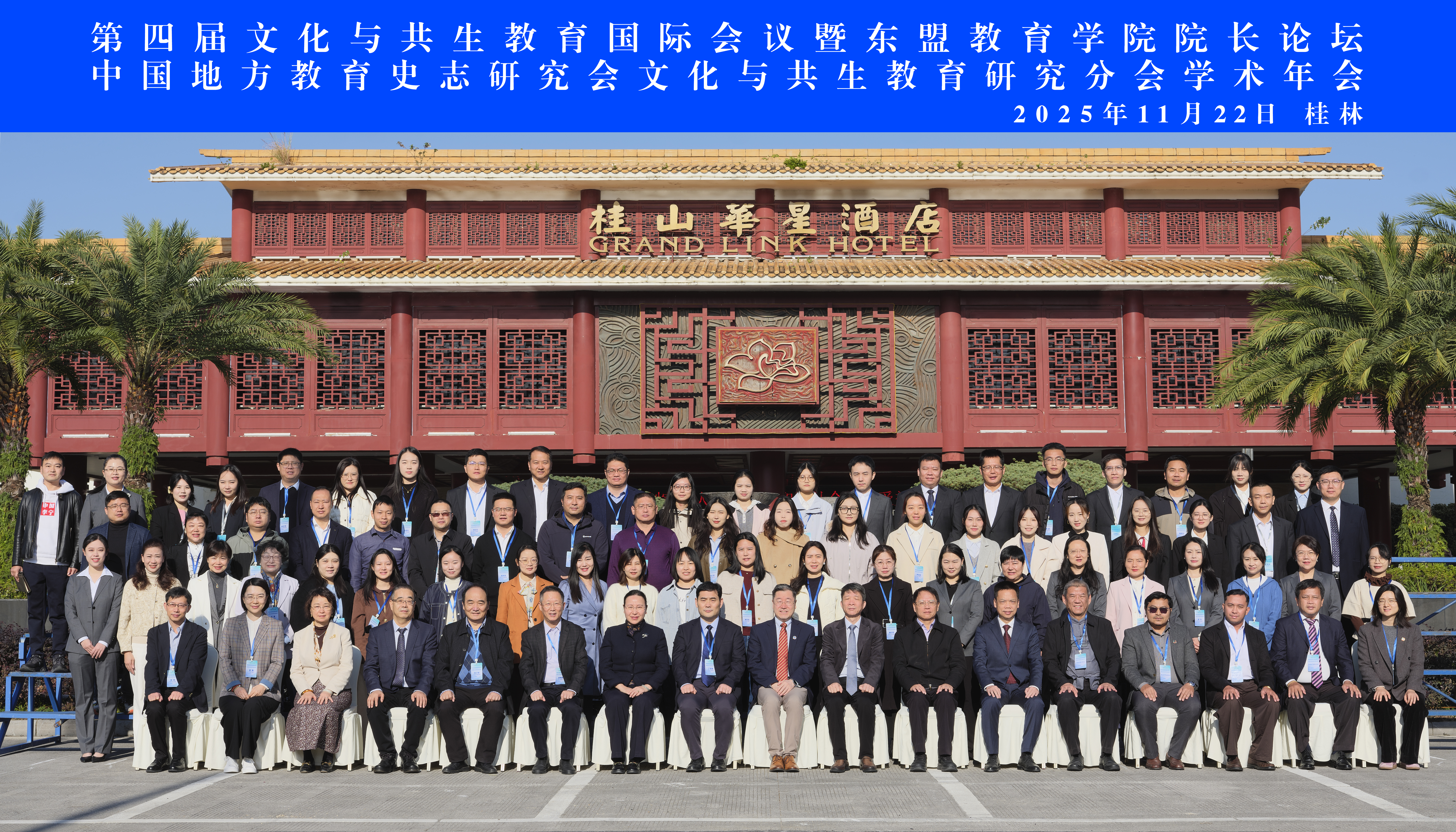
From November 22 to 23, 2025, the 4th International Conference on Culture and Symbiosis Education & ASEAN Deans of Education Forum was successfully held in Guilin, China. The event was jointly organized by Guangxi Normal University and the UNESCO International Research and Training Centre for Rural Education (INRULED). Under the theme “Towards Symbiosis: Challenges and Responses of Global Education in the AI Era”, the conference brought together education experts, scholars, practitioners, and graduate students from China, Lao PDR, Malaysia, the Philippines, Thailand, and Viet Nam to explore innovative pathways for educational development in the age of intelligent technologies.
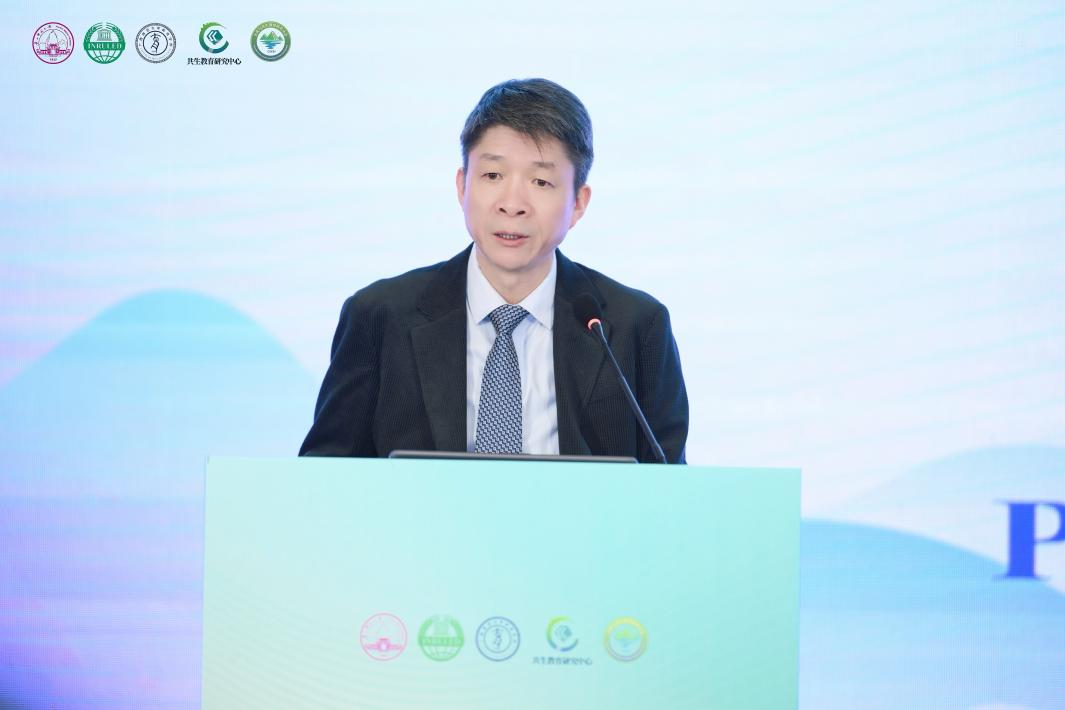
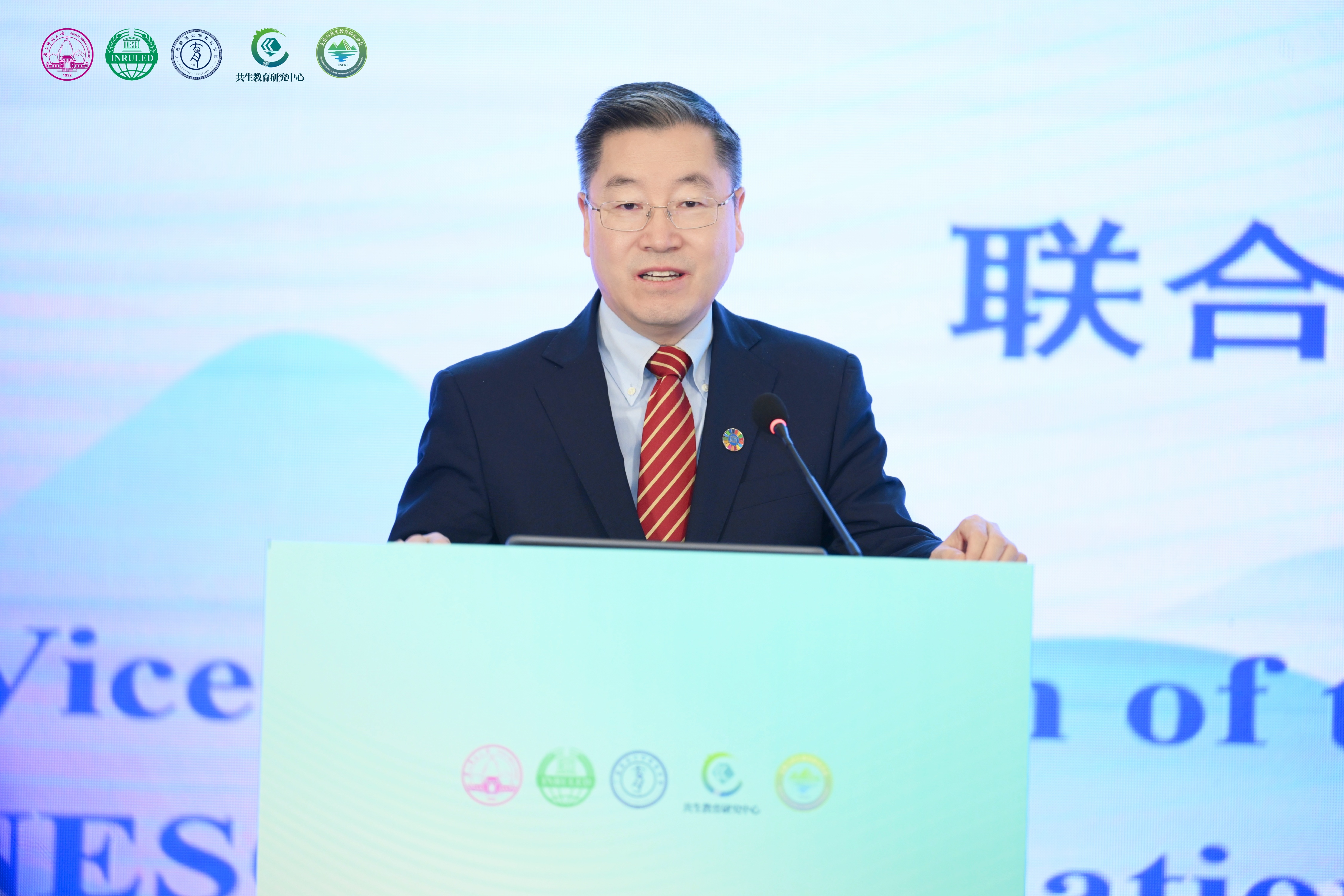
During the opening ceremony, Prof. Sun Jieyuan, President of Guangxi Normal University, delivered welcoming remarks. He noted that the International Conference on Culture and Symbiosis Education has, over its four iterations, become a significant academic platform in the Asia-Pacific region. This year marks the first integration of the ASEAN Deans of Education Forum into the event, further expanding the landscape of regional collaboration. He emphasized that the conference’s focus on equity, human-machine relationships, and other core issues provides a timely opportunity to build consensus on how education systems can navigate the challenges brought by technological change. Guangxi Normal University, he added, will continue to leverage its geographical and disciplinary strengths to advance research and practice in symbiosis education.
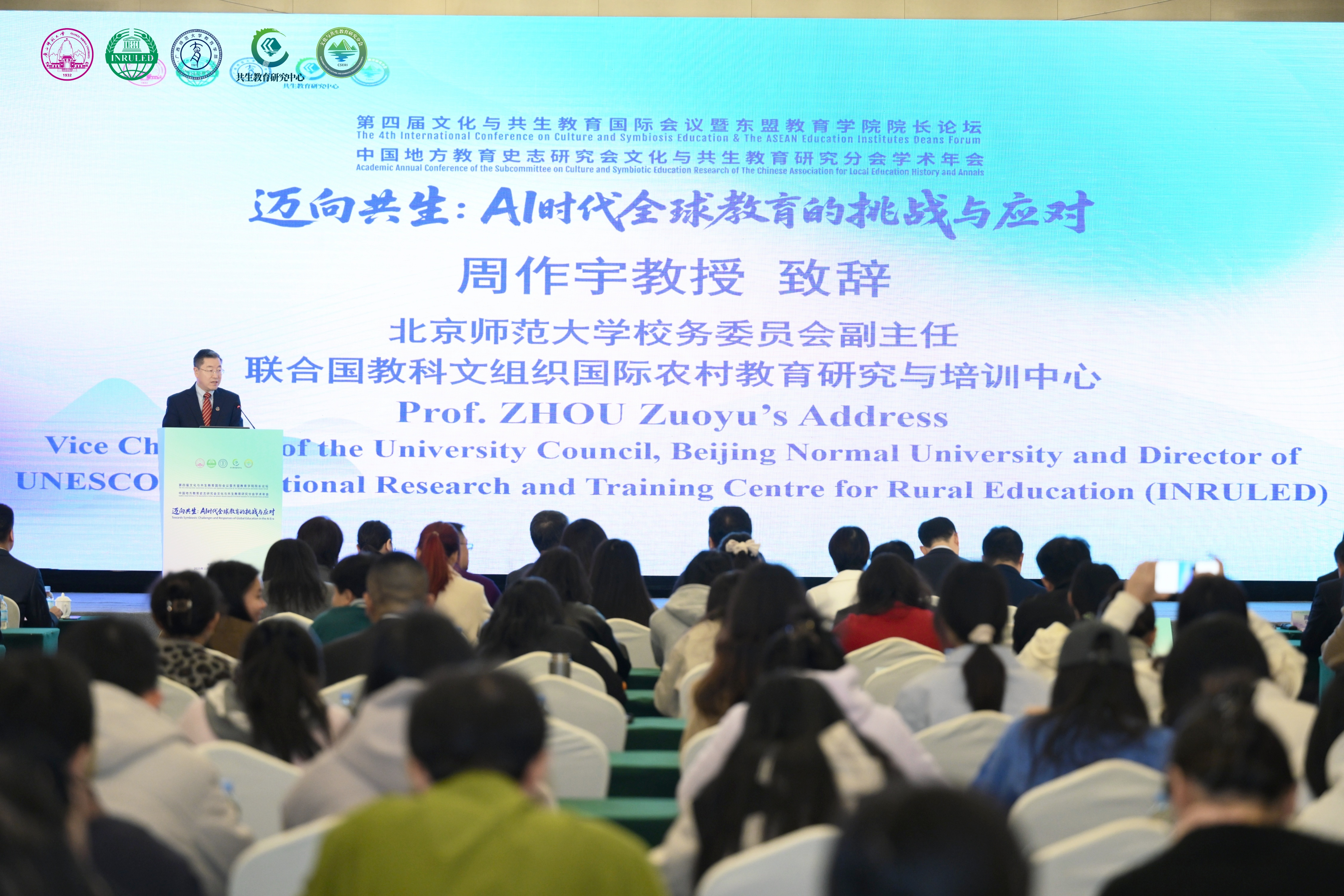
In his opening remarks, Prof. Zhou Zuoyu, Vice Chairman of the Beijing Normal University Council and Director of INRULED, noted that in an era of accelerating technological change and deepening cultural interconnectedness, the global education community faces a shared challenge: how to enhance mutual understanding amid diversity, strengthen connections across cultures, and ensure equity while fostering innovation. He reviewed INRULED’s recent collaborations in Southeast Asia, such as launching the China-Thailand Sustainable Rural Development Leaders’ Collaborative Network, supporting community learning centres in Cambodia, and co-organizing a series of capacity-building workshops with regional partners. He emphasized that INRULED will continue to uphold its mandate of promoting sustainable rural development through education and further contribute to China-ASEAN education cooperation through its cross-regional platforms.
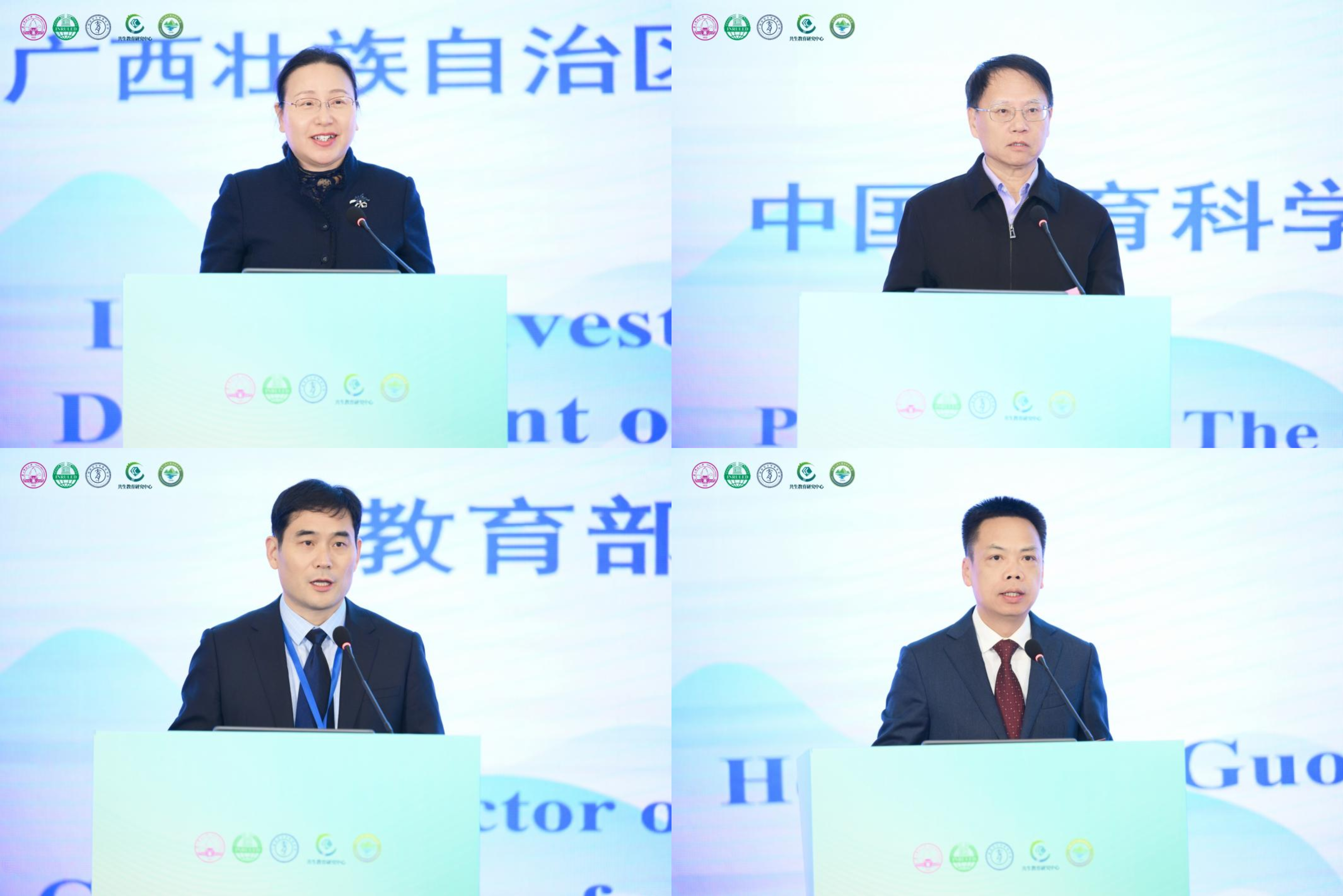
Ms. Lü Qing, Inspector of the Department of International Cooperation and Exchanges of the Education Department of Guangxi Zhuang Autonomous Region, Mr. Gao Baoli, President of the Chinese Association for Local Education History and Annals, and Mr. Ding Lianpu, Director of Division I of the Centre for China-Foreign People-to-People Exchange at the Ministry of Education, also delivered opening remarks. The ceremony was chaired by Prof. Lin Guoqing, Vice President of Guangxi Normal University.
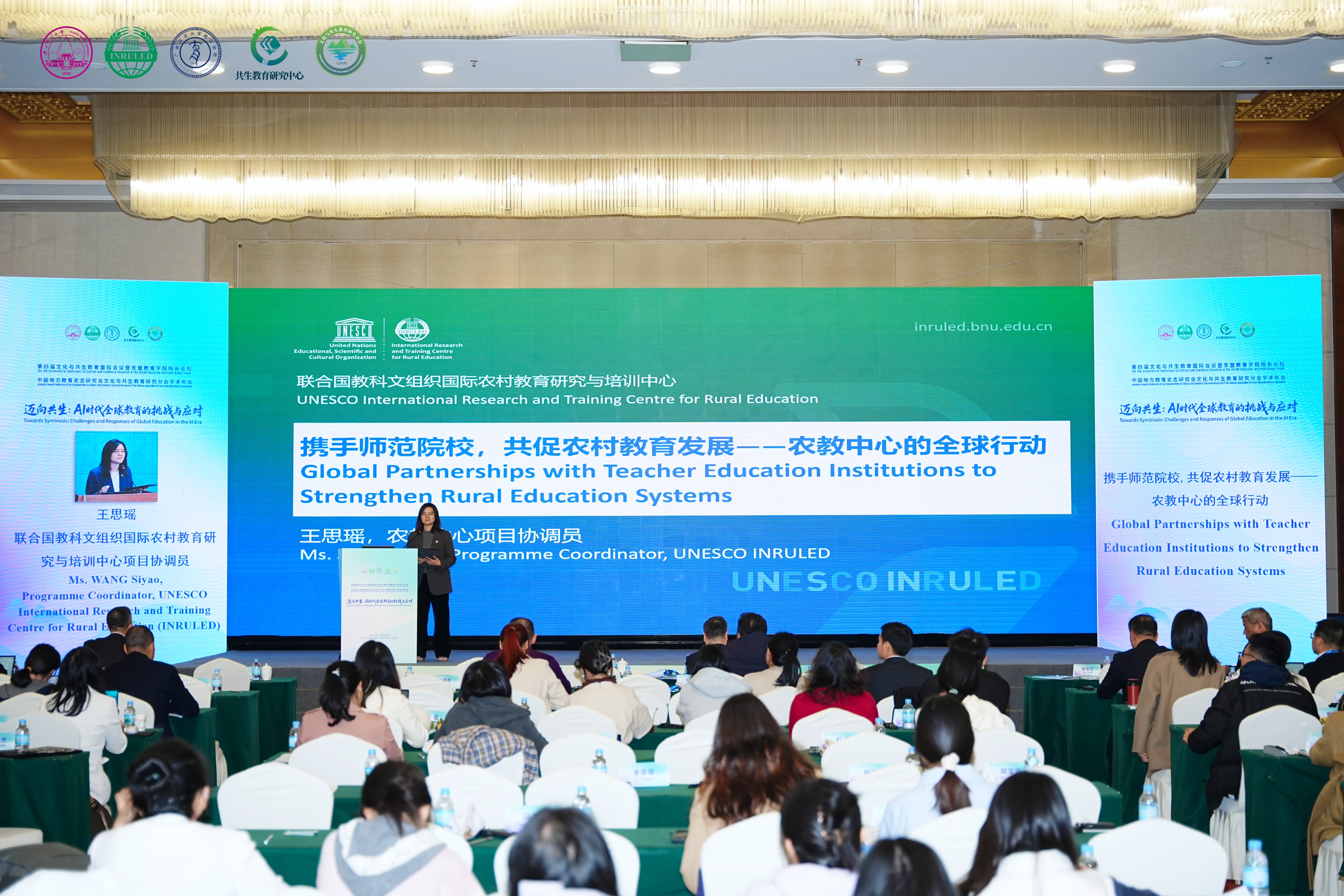
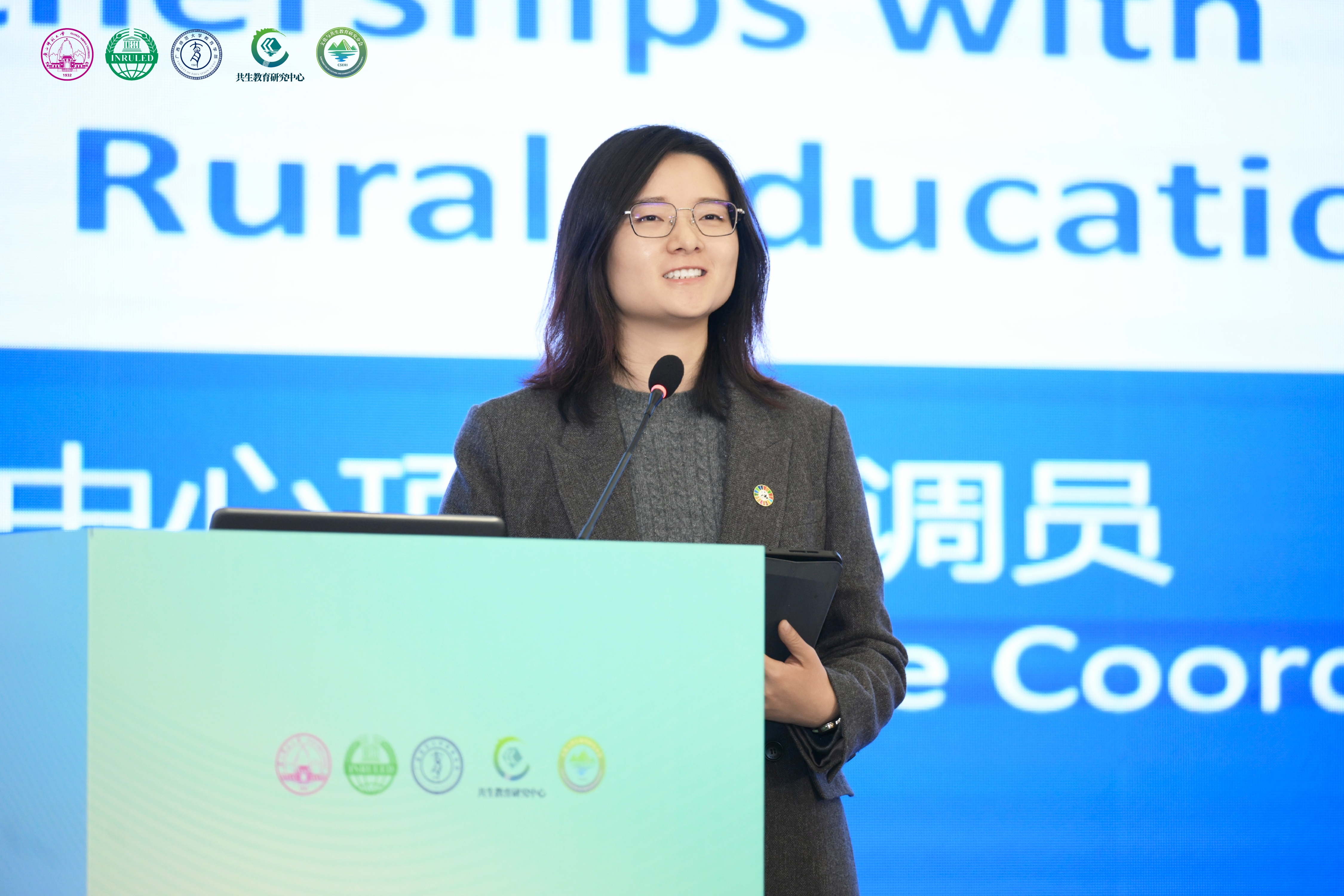
During the keynote session, Ms. Siyao Wang, Programme Coordinator of INRULED, delivered a presentation titled “Global Partnerships with Teacher Education Institutions to Strengthen Rural Education Systems”. She introduced INRULED’s global cooperation framework with teacher education institutions, structured around three pillars: cross-regional platform building, policy research on rural teachers, and capacity development. She highlighted INRULED’s major regional platforms, including the China-Africa Deans of Education Forum, the China-Pacific Islands Teacher Education Forum, and the ASEAN Deans of Education Forum, which together form a growing collaborative network linking Africa, Southeast Asia, and the Pacific. She emphasized that rural education policy is fundamentally education equity policy, and that teacher education institutions play a pivotal role in bridging policy, research, and classroom practice. She also called for continued attention to vulnerable groups in the AI era, ensuring that technological innovation genuinely advances educational inclusion.
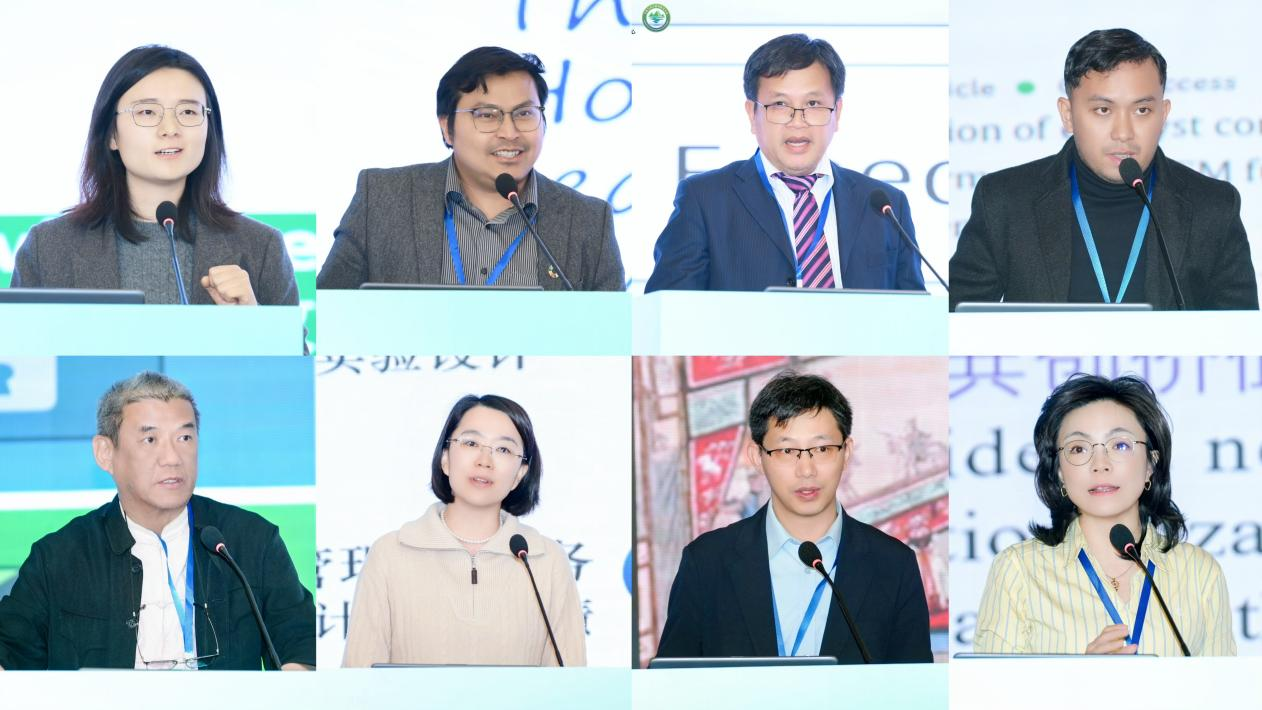
Fifteen renowned scholars from China and abroad delivered keynote presentations, including experts from Southwest University, Guangxi Normal University, Central China Normal University, Hanoi University of Social Sciences and Humanities, Prince of Songkla University in Thailand, Savannakhet University in Lao PDR, Bataan Peninsula State University in the Philippines, Universiti Tunku Abdul Rahman in Malaysia, and leading Chinese universities such as Peking University, Tsinghua University, and East China Normal University. Their contributions addressed key issues such as educational equity in the AI era and strategies for navigating disruptive technological transformations.
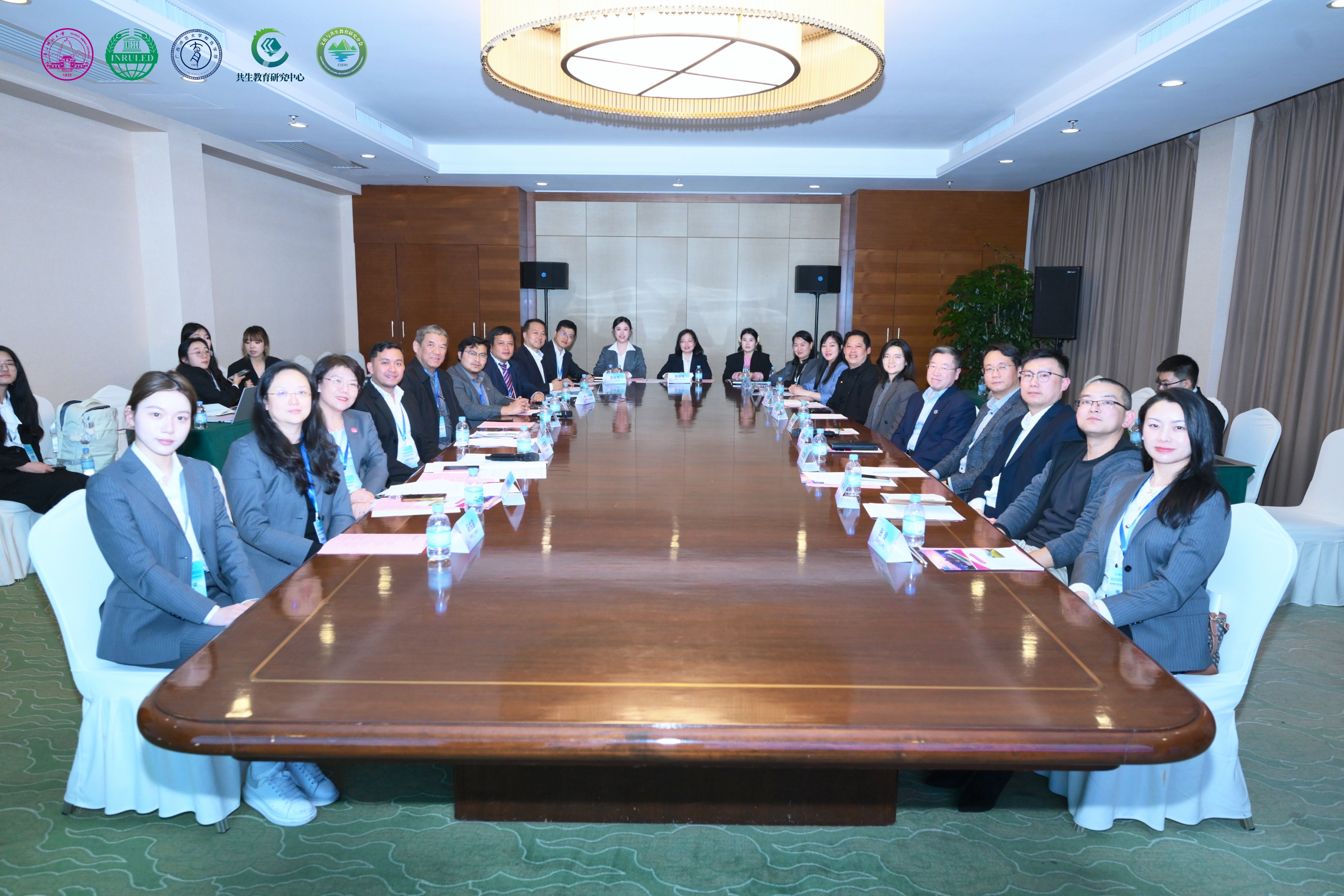
In the roundtable discussion, representatives from INRULED, Guangxi Normal University, and schools of education from Southeast Asian exchanged views on future collaboration. Prof. Zhou proposed three key directions for strengthening regional cooperation: establishing a long-term and stable cooperation network to advance the development of a China-ASEAN education community; leveraging faculties of education to deepen exchanges at both university and policymaking levels and enhance regional engagement in digital transformation and teacher development; and promoting concrete collaborative actions, including joint research, talent development and student exchanges, as well as the co-building of branded forums and practice platforms. He expressed the expectation that the roundtable would serve as a starting point for sustained collaboration and inject new momentum into regional educational innovation.
At the closing session, Dr. Michai Wongtong, Deputy Dean for Strategy and International Affairs of Prince of Songkla University, highly commended the outcomes of the conference and reaffirmed the value of deepening China-ASEAN educational and cultural cooperation. The successful convening of the event not only injected new vitality into China-ASEAN education collaboration but also broadened and deepened regional cooperation in educational innovation. By linking symbiosis education with global AI-era challenges, the conference provided valuable insights for strengthening China’s international educational engagement and contributed regional perspectives and solutions to the sustainable development of global education.